
Biodiversity Net Gain Update: New Exemption for Sites of 0.2 Hectares or Less
A significant change to Biodiversity Net Gain requirements has taken effect in England.
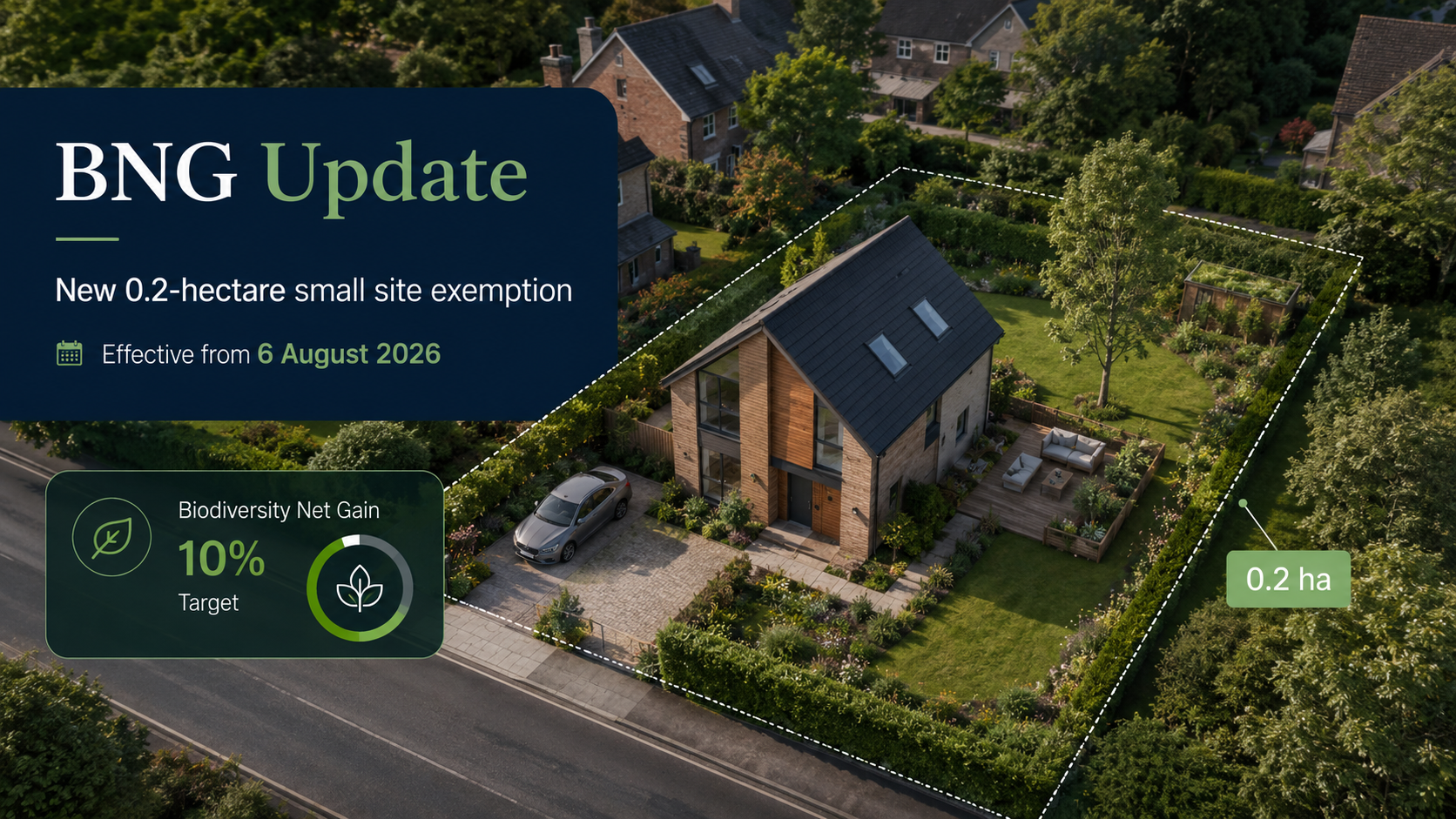
From 6 August 2026, planning applications for developments on sites of 0.2 hectares or less will generally be exempt from mandatory Biodiversity Net Gain requirements.
The change is intended to create a more proportionate planning process for smaller development sites.
What has changed?
The exemption may apply where:
the total site area within the planning application’s red-line boundary is 0.2 hectares or less; and
the proposed development will not negatively affect priority habitat on the site.
A site area of 0.2 hectares is equivalent to approximately 2,000 square metres.
The exemption applies to the total area within the application boundary, rather than only the building footprint or area directly affected by construction.
What does this mean for smaller developments?
Where the exemption applies, applicants may no longer need to complete the full statutory BNG process, including:
biodiversity metric calculations;
a Biodiversity Gain Plan;
the purchase of off-site biodiversity units; and
long-term BNG monitoring and management arrangements.
This could reduce the cost, complexity and time involved in preparing planning applications for qualifying smaller developments.
Are ecological assessments still required?
Potentially.
The exemption relates specifically to mandatory Biodiversity Net Gain. It does not remove wider ecological or planning requirements.
Further assessment may still be needed where a site could contain:
priority habitat;
protected species;
trees or hedgerows;
designated ecological areas; or
other features protected through national or local planning policy.
Early ecological advice may therefore still be appropriate, particularly where the condition or ecological value of the site is uncertain.
Other BNG changes
The small-site exemption forms part of a wider update to the BNG regulations.
The changes also include:
a new exemption for qualifying temporary developments permitted for five years or less;
greater flexibility for some minor developments to deliver biodiversity improvements off site; and
the removal of the previous standalone exemption for self-build and custom-build developments.
Self-build and custom-build proposals may still qualify under the new small-site exemption where the relevant criteria are met.
What should applicants consider?
Before relying on the exemption, applicants should confirm:
The total area within the red-line planning boundary.
Whether priority habitat could be affected.
Whether other ecological surveys or assessments are required.
The local planning authority’s validation and policy requirements.
Whether the application clearly explains why the exemption applies.
Reviewing these matters early can help avoid unnecessary consultant costs and reduce the risk of delays during the planning process.
How Fairbank Consulting can help
Fairbank Consulting supports clients from initial feasibility through planning, technical design and project delivery.
We can assist with reviewing site constraints, defining the planning boundary, identifying the necessary consultant input and coordinating a clear, proportionate planning strategy.
For advice on how the updated BNG requirements may affect your development, please contact the Fairbank Consulting team.